
Volunteers
At St Martin’s, we greatly value the contribution that volunteers make to the life of our school. We welcome individuals who wish to support learning, contribute to school life, or gain experience working in an educational setting. Members of our wider community bring unique skills, knowledge, and interests that enhance teaching, enrich the curriculum, and help raise standards for all pupils.
There are several ways to volunteer throughout the school year:
-
Volunteering in school
Regular support within classrooms or across the school. This requires a DBS check and full safeguarding induction. -
Volunteering on school trips
Supporting staff during specific educational visits. -
Volunteering on local walks
Assisting with short, local trips such as accompanying pupils to St Martin’s Church.
Further details for each type of volunteering are provided below.
Volunteers in school
Our approach
We are committed to ensuring that volunteers feel welcomed, supported, and confident in their role. Teachers will ensure that all volunteers working within their class understand the routines, expectations, and procedures necessary to keep both volunteers and pupils safe.
Volunteers may be placed in any year group across the school, which may include a class where they do not have a child. This helps us meet the needs of pupils most effectively.
Requirements for all in‑school volunteers
To ensure the safety and wellbeing of pupils:
- All volunteers must complete a DBS check.
- Volunteers must attend a Safeguarding Induction, which includes a school tour.
- All volunteers must complete Flick online safeguarding training.
- A short application form is required, including two character references.
- Volunteers must follow school policies and procedures at all times.
Supporting pupil behaviour
Volunteers help model and reinforce the St Martin’s Promises. Please support our approach to positive behaviour by encouraging respectful, kind, and safe conduct at all times.
Role of volunteers in school
Volunteers support learning by:
- Listening to pupils read
- Supporting small group activities
- Assisting with practical tasks or events
- Sharing personal or professional expertise
- Helping with classroom organisation or resources
Volunteers should be approachable and encouraging, while maintaining professional boundaries. For safeguarding reasons:
- Children must not sit on a volunteer’s lap or be picked up.
- Children and volunteers address each other by surname (e.g., Mrs Smith).
Key Information for Volunteers
School Day Timings
Your class teacher or supervising member of staff will confirm the times of the session you are supporting.
Security Procedures
- Sign in and out every time you enter or leave the building.
- Wear the school-issued security badge at all times.
Mobile Phones & Devices
- Must not be used around children.
- Must be switched off or silent.
- No photos or videos may be taken on personal devices.
- If you need to carry a phone (e.g., for medical reasons), inform the class teacher.
Refreshments
Staff may offer you a drink at breaktime where appropriate. Volunteers are not usually permitted in the staffroom.
Emergency Procedures
If you discover a fire:
- Raise the alarm immediately
- Leave via the nearest exit
- Close all doors behind you
- Assemble on the large field
If you hear the alarm:
- Leave via the nearest exit
- Assemble on the large field
- Do not re-enter until authorised by the Site Manager or Fire Brigade
Health & Safety / Behaviour / E‑Safety
You will be asked to confirm that you have read and understood:
- The Health and Safety Policy
- The Behaviour Policy
- The E‑Safety / Online Safety Policy
Child Protection and Safeguarding
Safeguarding is everyone’s responsibility. Volunteers must read and sign to say they understand the Child Protection and Safeguarding Policy.
If you have a concern about a child:
- Do not speak to the child about it
- Do not discuss the concern with anyone outside school
- Do report it immediately to one of the safeguarding team:
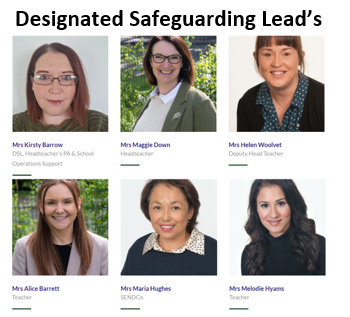
We ask our volunteers to be mindful of confidential information related to individuals, both children and adults and ensure it is not shared beyond the staff team. The staff are professional and do not discuss matters concerning children or families outside the remit of their professional role.
Volunteers on school trips
School trips are an integral part of learning at St Martin's and afford many children opportunities which are outside their usual experiences.
Role of the volunteer helper when on a school trip:
- To be responsible and look after, in equal measure in conjunction with school staff, all of the children in your group.
- To stay with your allocated staff member / group of children, ensuring that their well-being and safety is maintained for the total duration of the school trip.
- To promote polite, respectful and courteous behaviour towards each other and members of the general public. We all go as ambassadors of our school.
- To ensure that the group you are with keep up with the body of the school visit party, be it walking, entering or exiting from transportation or following speakers for the trip.
- To contact your child’s class teacher / school member of staff if there are issues with first aid, safety and / or behaviour.
- To show commitment to your group, an interest in the focus of the visit and assist children in their learning by helping them to read signs / labels/ information, asking questions that encourage children to think. Follow guidance from the school staff.
What is not permitted?
- Volunteer helpers are not allowed to bring additional siblings on the school trip.
- Volunteer helpers are not allowed to re-organise school visit groups.
- Volunteer helpers are not allowed to smoke, vape, drink alcohol or engage in any illegal practices.
- Volunteer helpers are not permitted to take photographs of children.
- Volunteer helpers are not allowed to give / buy their group treats e.g., ice-creams, biscuits, sweets – before, during or after the school trip.
- Volunteers to be mindful of confidential information related to individuals, both children and adults and ensure it is not shared beyond the staff team.
First Aid
You will be made aware of who is first aid trained. This may be a member of staff on the school trip, or a first-aider provided by the supplier of the school trip. Teachers will be aware of any child in your group that has medication / needs and will advise if appropriate. If medication needs to be administered, this will be done by a trained member of staff.
Emergencies
We ask that you inform a member of staff as soon as possible, if you become separated from the rest of the school party. Please telephone one of the members of staff on your contact list or telephone the school directly.
Mobile Phones
Mobile phones and personally owned devices should not be used around children. They should be switched off or silent. Volunteers should not use personal devices such as mobile phones or cameras to take photos or videos of pupils. If there is an emergency, and you need to use your mobile phone, please let a member of staff know.
Child Protection & E-safety
You will be asked to sign to confirm that you have read and understood our Child Protection and Safeguarding Policy and our ICT & Online Safety Policy.
Volunteers with local trips (e.g. walking to the church)
Role of the volunteer
Volunteers help ensure safe and efficient movement through the local community. This may include:
- Supporting road safety and crossing points
- Helping children walk safely in pairs
- Reinforcing expectations for behaviour in public spaces
- Assisting staff in maintaining appropriate pace and supervision
What is not permitted
- Bringing additional children or siblings
- Using mobile phones around children
- Taking photos or videos
- Giving food, treats, or purchases
- Diverting from the agreed route or instructions
- Sharing confidential information
Work Experience (Under 18's)
Role of work experience volunteers
Students undertaking work experience will:
- Support learning under close supervision
- Help with simple tasks such as preparing resources
- Assist with reading or group work (where appropriate)
- Observe professional practice to develop skills and understanding
They are not expected to take responsibility for groups of children.
What is not permitted
- Being left unsupervised with children
- Handling confidential information
- Taking photographs or using a mobile phone
- Managing behaviour independently
- Completing tasks outside the scope of their placement